Security vs. Liberty
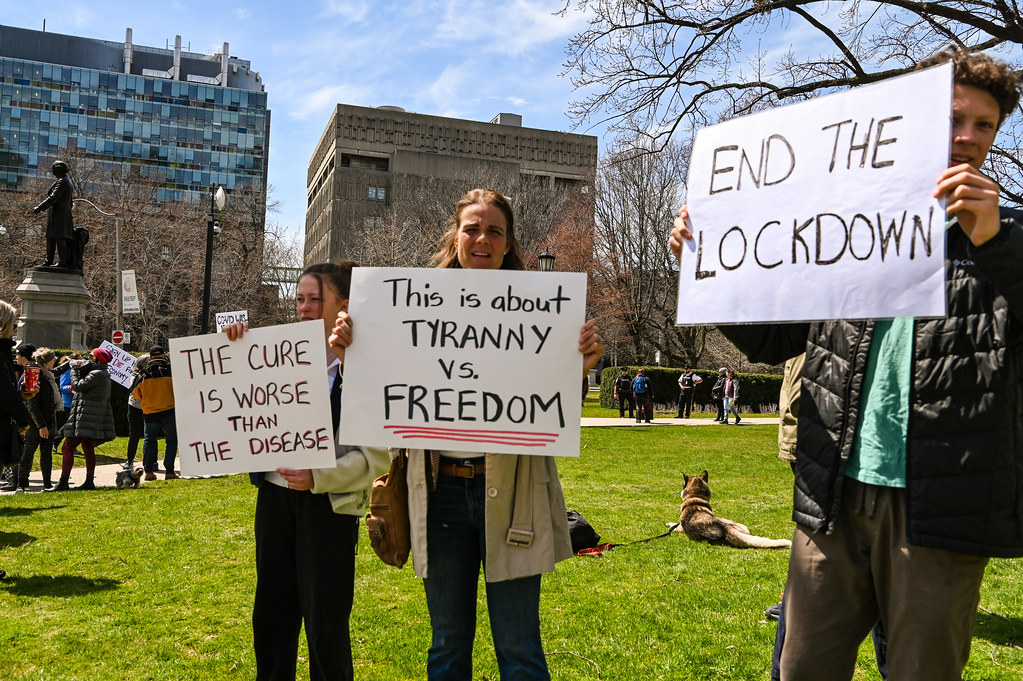
Security is often seen as a duty of governments, but in reality, it sometimes protects power more than people. Challenges such as terrorism, conflicts, refugee movements, or pandemics are frequently framed as extreme threats, and leaders often use them to justify strict measures. As a result, for young people experiencing these policies, freedom can be restricted, even when governments claim they are acting to protect citizens.
In Lebanon, political leaders often cite the refugee crisis and demographic concerns to block reforms that protect human rights. For example, Lebanese women still cannot pass citizenship to their children or spouses, unlike men. Officials argue that changing this could disturb a delicate sectarian balance, while refugees continue inheriting refugee status across generations. For young people, these rules illustrate how fear can preserve old power structures rather than protect citizens.
Similar patterns appear elsewhere. In the U.S., the Patriot Act expanded surveillance after the 11th September In France, the 2015 terrorist attacks led to long-lasting emergency powers. In Türkiye, the 2016 coup attempt gave the government broad authority over media and academics. In each case, leaders made the argument that citizens’ freedoms must be curtailed to stay safe.
For young people, these policies often feel like a trade-off between security and liberty. Fear shapes politics more than justice, affecting daily life, mobility, and trust in institutions. Importantly, control does not always come from violence; sometimes, people follow rules because they believe they must. Youth experience this daily, noticing how fear can make restrictive rules feel normal. Behavioral science explains that people feel losses more strongly than gains, so even a small threat can feel urgent. As a result, governments can use this perception to make temporary measures appear permanent. Youth are learning to question what “safety” really means and to protect rights without yielding to fear.
In my work with displaced youth, I observed how fear of deportation or conflict shaped daily decisions. Yet, young people found ways to support each other, share accurate information, and create safe spaces even under restrictive rules. Youth networks in Lebanon document abuses and advocate for refugees, showing that resistance is both possible and practical. Formal youth bodies also play a role in reshaping how security and dignity are understood.
As a member of the Netherlands Embassy Youth Advisory Council and the UNDP Youth Advisory Board, I contributed to programs that bring together youth from Lebanese, Syrian, and Palestinian communities to advise institutions, monitor impact, and ensure policies reflect marginalized realities. Beyond advisory roles, youth-centered programs strengthen resilience and challenge fear narratives in practical ways. For example, the British Council’s debating and ‘Active Citizens’ programs help youth build critical thinking and conflict-resolution skills, enabling them to engage in sensitive security discussions confidently.
Mercy Corps’ digital and technical skills trainings equip youth with tools to identify misinformation, protect themselves online, and contribute to community-led solutions. Several Netherlands Embassy–funded initiatives—where I supported monitoring and evaluation—foster social innovation and entrepreneurship, encouraging youth to design solutions to local challenges through inclusion and cooperation. Together, these platforms demonstrate how meaningful youth engagement can transform security from a fear-based concept into a participatory, dignity-centered practice.
Even when leaders use fear to maintain control, young people find ways to understand and practice security. While insecurity can be weaponized, youth experience its impact most directly and are often the first to resist fear-driven authority.
Fear, Authority, and Youth Resistance
Political leaders worldwide are masters of fear-based governance. In 2004, Tony Blair described a “new kind of war” in which intangible, distant threats justified extraordinary sacrifices at home. In Egypt, decades-old emergency laws grant authorities broad powers to detain dissenters under the banner of counterterrorism. In Türkiye, political opponents are often framed as “enemies of the state,” legitimizing extraordinary measures to “protect national unity.” In these contexts, dissent becomes not merely disagreement but an accusation of betrayal. When insecurity is framed as permanent, fear becomes a political resource, conditioning people to accept authoritarian tools as normal.
For young people, witnessing this cycle of fear can feel disempowering. Yet it also motivates them to question authority and imagine alternatives to fear-driven compliance. Across the regions I have lived and worked in, youth are often the first to challenge fear-based narratives because they experience consequences directly: border closures, stalled reforms, and shrinking civic spaces. Rather than waiting for institutional permission, youth are reshaping what security means from the ground up.
In Lebanon, the Munāẓara program is a powerful example of youth-led accountability. I joined its first cohort in 2021, and it has continued actively through 2024. The program brings together youth nationwide to participate in live televised debates with policymakers, public officials, and influential decision-makers. Through structured argumentation, evidence-based dialogue, and public questioning, youth challenge dominant political narratives, confront officials with urgent community concerns, and propose alternative policy solutions. Munāẓara transforms political communication from a one-directional monologue into an arena of democratic contestation, where young voices directly question power. Its ongoing impact demonstrates that even when formal institutions restrict civic participation, youth can reclaim agency through debate, public scrutiny, and collective problem-solving.
Youth-Led Peacebuilding and Cross-Border Advocacy
Building on these local and national challenges, youth networks extend their resistance to cross-border advocacy, showing that the fight against fear-based governance transcends national boundaries. During the 2015–2023 migration period, the EU increasingly framed mobility as a “security crisis,” normalizing deterrence measures, externalized border controls, and emergency legal exceptions. Young researchers, legal advocates, and monitoring groups—many refugees or second-generation migrants—played a critical role in challenging this narrative. Through documentation of pushbacks in Greece and the Western Balkans, analysis of asylum policy gaps, and rights-based advocacy, these youth-led initiatives reframed security not as border fortification but as dignity, safe mobility, and procedural fairness. Their work demonstrates how knowledge production itself becomes a form of resistance to fear-based governance.
Moreover, these examples show how young people transform fear into action. Across borders, youth translate critique into concrete actions that redefine security through participation, accountability, and human dignity.
Beyond Europe, youth-led peacebuilding and accountability initiatives emerged globally—from digital hate-speech monitoring groups in Kenya and Nigeria, to disinformation-countering collectives in the Balkans, to environmental security activists across the Mediterranean. These initiatives reflect the core principles of the UN Security Council Resolution 2250 (Youth, Peace, and Security), which recognizes youth as agents of peace rather than risks to be contained. Moreover, youth networks consistently demonstrate that resisting fear is both possible and already underway. Whether by documenting injustices, generating reliable data, defending human rights, or building inclusive community platforms, young people offer an alternative model of security grounded in participation, transparency, and human dignity.
Institutional Challenges and Youth-Led Solutions
Institutional Challenges:
International institutions and national legal systems were designed to uphold rights and check arbitrary power, yet they often struggle under fear-driven politics. NATO emphasizes “responsible AI” and human accountability, but some members reportedly use opaque, lethal AI systems without oversight. The European Union faces similar tensions: the Dublin Regulation disproportionately burdens frontline states like Greece and Italy, while the New Pact on Migration and Asylum externalises border control to countries where migrants face severe risks, raising serious non-refoulement concerns. Courts provide crucial counterweights: the European Court of Human Rights has repeatedly affirmed non-refoulement (Soering v. United Kingdom), and Germany’s Constitutional Court struck down mass-surveillance legislation, protecting digital rights. However, even these protections can strain under urgency and fear.
Youth-Led Solutions:
Where institutions falter or act slowly, youth step in to redefine security in practice. Across Lebanon, Türkiye, and Europe, young people navigate visa regimes, respond to crises, and use digital platforms to counter misinformation. They create peer-led fact-checking initiatives, document rights violations, and advocate for procedural justice and safe mobility. Programs such as Lebanon’s Munatahar youth debate (2021–2024), youth councils supported by the Netherlands Embassy, UNDP advisory boards, and technical skills and social entrepreneurship programs run by Mercy Corps demonstrate how young people from diverse backgrounds—including Syrian and Palestinian refugees—actively shape accountability, policy discourse, and problem-solving approaches.
By combining institutional advocacy with community-led initiatives, youth demonstrate that security is not merely the absence of threat—it is a practice of dignity, participation, and human-centred protection. Rather than reproducing cycles of fear, they disrupt them, showing that meaningful security emerges when transparency, accountability, and civic engagement converge.
About the Author:
Nabila Arab is a migration researcher and practitioner whose work and research and centered on peace, conflict, and civil society in the Middle East and North Africa. She has operational experience supporting humanitarian programmes in Lebanon, Northwest Syria, and Southern Türkiye, as well as contributing to advocacy efforts, policy development, and the implementation of sustainability and relief programmes. Nabila is an active youth advocate, serving as a Youth Advisory Board member for UNDP Lebanon and the Netherlands’ Embassy (YAC) coordinating regional youth empowerment with Alsharq Youth, and representing Lebanese youth delegations at COP28 and COP29. Be sure to follow her work here.
References
- Blair, T. (2004, March 5). Sedgefield speech on global security. Prime Minister’s Office, United Kingdom. https://webarchive.nationalarchives.gov.uk/
- Chesney, R., & Citron, D. K. (2019). Deep fakes: A looming challenge for privacy, democracy, and national security. California Law Review, 107(6), 1753–1819. https://doi.org/10.15779/Z38H98ZF6R
- European Commission. (2024). New pact on migration and asylum. https://commission.europa.eu
- European Court of Human Rights. (1989). Soering v. United Kingdom (Application no. 14038/88). https://hudoc.echr.coe.int
- Federal Constitutional Court of Germany. (2020). Judgment on foreign surveillance by the Federal Intelligence Service (BND) (1 BvR 2835/17). https://www.bundesverfassungsgericht.de
- North Atlantic Treaty Organization. (2021). NATO artificial intelligence strategy. https://www.nato.int