“The sad truth is that most evil is done by people who never make up their minds to be good or evil.”
— Hannah Arendt, The Banality of Evil
As a 29-year-old peace activist who grew up under the shadow of UNSCR 541 and 550, I have always understood the urgency of peace and security. This drives my belief that youth are not just tomorrow’s leaders but today’s architects of peace. In a world marked by protracted conflicts, polarisation, rising inequalities, and climate-induced tensions, the United Nations Security Council Resolution 2250 on Youth, Peace and Security (YPS) provides a vital framework for recognising young people as essential partners in building and securing sustainable peace.
Youth Bridging the Divide
“Recognising that young people play a crucial role in the prevention and resolution of conflicts and are key actors in building sustainable peace.”
— UNSCR 2250 (2015)
Adopted in 2015, Resolution 2250 urges member states to increase inclusive representation of youth in decision-making at all levels, protect them in conflict zones, and support their roles in prevention and resolution efforts.
My own journey in this space has been shaped by grassroots initiatives in Cyprus—a divided island where peace-building is both a personal and (should be a) political imperative whilst embodying a forward-looking commitment to amplifying youth voices globally. Hannah Arendt’s warning about the banality of evil underscores the peril of passive indifference in divided societies like Cyprus, Serbia/Kosovo*, Israel/Palestine, where insolvency has normalised the status quo. This truth has fueled my rejection of neutrality, compelling youth to confront the quiet erosion of shared humanity through deliberate, principled action.
A cornerstone of my advocacy has been directly involved in the establishment of the Bi- Communal Technical Committee on Youth, a youth-led structure now formally recognised in UN Cyprus Talks. Originating from the 2022 Local Conference of Youth (LCOY) Cyprus. Held under UNFCCC’s YOUNGO and UN Peacekeeping Force in Cyprus’ auspices, this initiative culminated in consensus calls to the leaders for a dedicated Youth Technical Committee.
We demanded implementation of UNSCR 2250 and related resolutions (2618, 2587, 2618), island-wide youth cooperation, and mandatory youth representation (ages 16–35) in all Technical Committees. The idea was presented directly to former Cypriot leaders Mr Anastasiades and Mr Tatar at the 2022 UN-hosted end-of-the-year diplomatic reception, followed by escalations to UN officials, including Rosemary DiCarlo and António Guterres (2023–2024), panels at Cyprus Forum and COP28, meetings with EU Parliament President Roberta Metsola and UN Under-Secretary-General Jean-Pierre Lacroix, and official submission by the Republic of Cyprus in New York (October 2024). These efforts bore fruit at the January 2025 Cyprus talks Geneva informal meeting, where the Committee was surprisingly endorsed. It has been envisioned as an active, expert-driven body integrating youth perspectives into Track-1 negotiations.
The importance of practice sharing and meeting with others in other conflicted societies helps to realise that we are not alone in this. I have realised the importance of this when I attended regional networks such as WeAreMENA and BeeEffect. In these spaces, I was reminded that my version of peace and security architecture is not so impossible and unrealistic once we have the opportunity to understand and learn from each other.
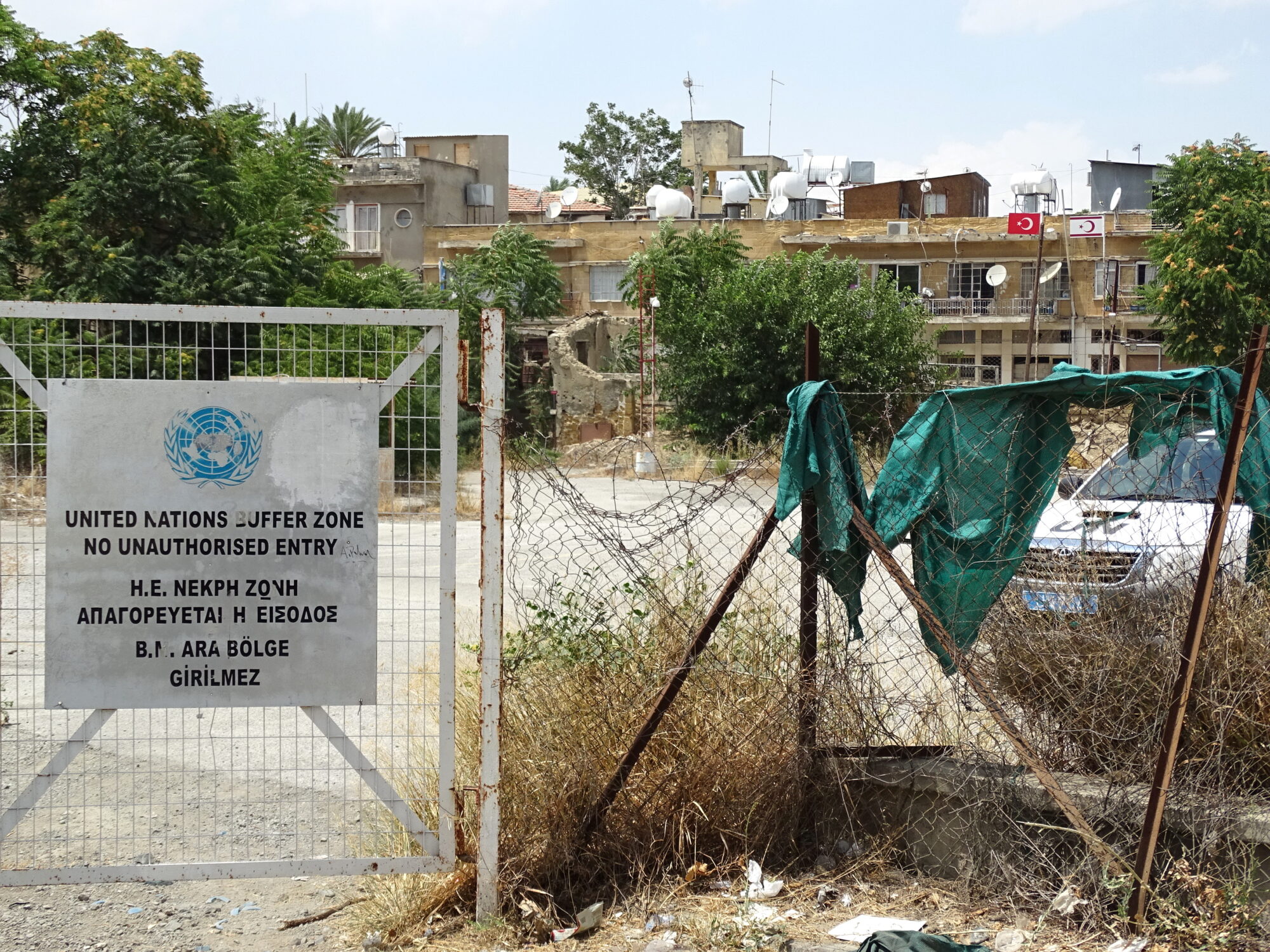
In addition to these regional engagements, my local peacebuilding efforts have focused on fostering collaboration at the grassroots level, including through recent events that highlight the power of local governance in divided contexts. For instance, on October 22, 2025, a bi-communal gathering titled “Imagine a Capital Beyond Division: Youth Voices for Nicosia” at the UN-controlled Buffer Zone under the auspices of the British High Commission in Cyprus. More than 120 youth from both communities joined local leaders Mr Mehmet Harmancı and Mr Charalambos Prountzos to discuss shared environmental challenges and reconciliation and proceed a youth vision masterplan for the future of the capital of Cypriots in an inclusive civic space, in other words, an ‘agora for peace’. The session opened the floor to youth questions, comments, and proposals, amid post-presidential election hopes for renewed peace momentum. Discussions emphasised sustaining this opportunity through small steps while continuing to think big, reaching peace sceptics, and youth-driven initiatives like expanding joint spaces, new crossing points, and integrating peace language into curricula, and protecting shared cultural heritage.
The mayors pledged full collaboration on youth priorities, underscoring how local governance can deliver services and promote sustainable livelihoods to sustain peace. As peacebuilding literature affirms, “good local governance can contribute to sustaining peace… by delivering services and promoting sustainable livelihoods,” emphasising how local decisions shape inclusive outcomes.
Taking Heed and Learning Lessons
Imagine the symbolic impact of mayors from East and West Berlin meeting during the Cold War era, or similar dialogues in Mitrovica (Kosovo) bridging Albanian and Serb communities, or even hypothetical exchanges between Ramallah and Tel Aviv to humanize the ‘other’ side—these examples reflect how local leaders can drive reconciliation from the ground up, much like our efforts in Cyprus to integrate youth voices into municipal planning for a unified future.
With Resolution 2250’s 10th anniversary in 2025, we must shift from rhetoric to action by dismantling systemic barriers. Governments should mandate youth quotas in negotiations—evidenced by Colombia’s 2016 process, where youth inclusion reduced recidivism. Yet meaningful YPS progress doesn’t require huge funding; our Nicosia event and Committee endorsement succeeded through modest resources and, above all, brave political will to support youth-led exchanges and events.
My work in Youth Peace and Security has taught me that peace is not the absence of conflict, but the presence of inclusive, youth-driven solutions.
When you meet with the ‘other’, they cease to be a headline, a statistic, or a distant concept; you disturbingly realise that they are a living person with a family, friends, language, and history. This is the transformative power of people-to-people contact: it re-humanises the ‘other’ and rebuilds the foundation of peace.
As we look ahead, let us heed Resolution 2250’s call and the warnings of Arendt: invest in youth today, reject the banality of inaction, for a better tomorrow.