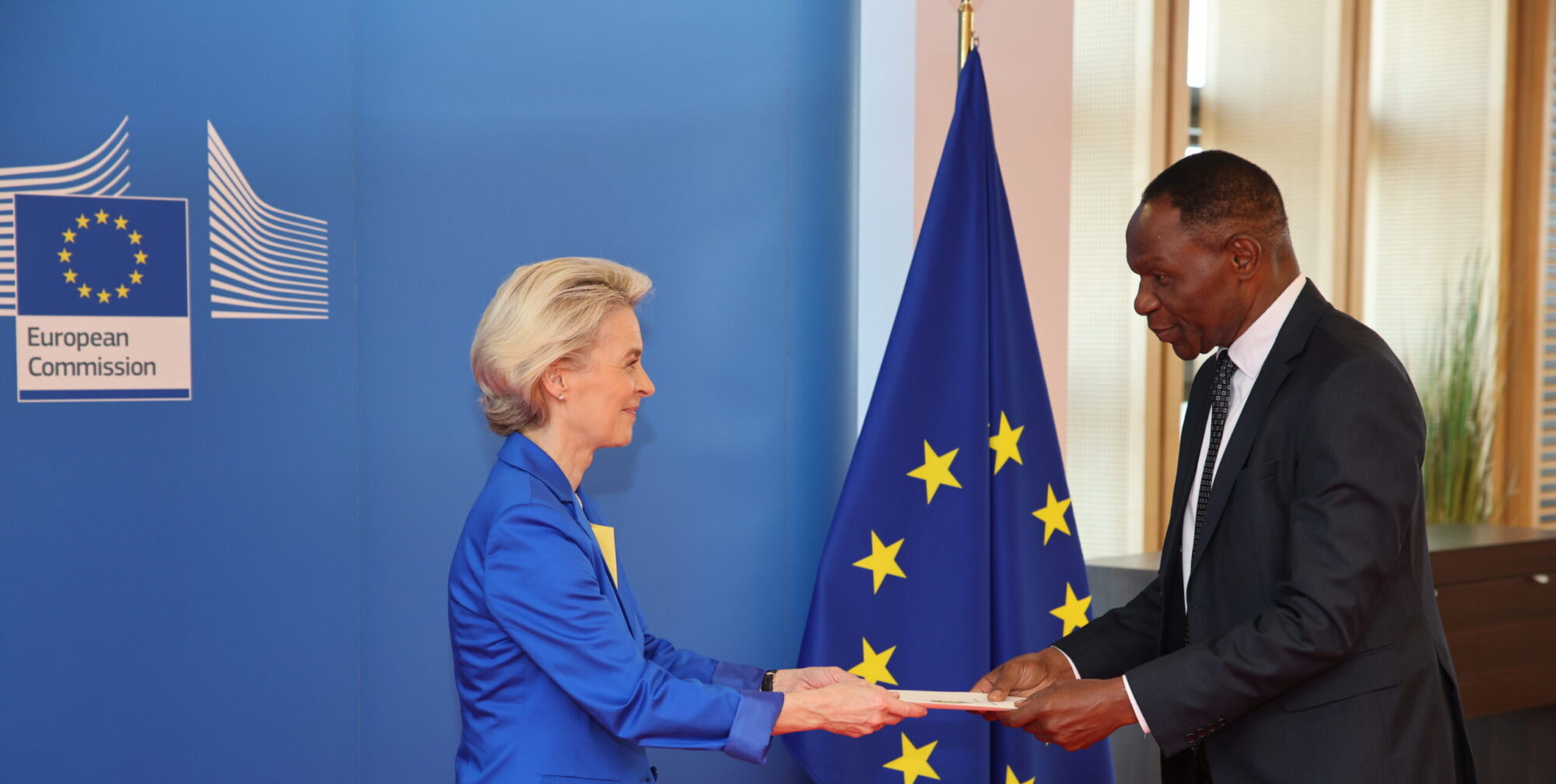
When I first entered the world of Youth Peace and Security, I carried with me the weight of my identity as a young person from a marginalised and historically underrepresented region of Kenya. I also carried the determination to ensure that young people like me were no longer spoken about in global spaces but spoken with. Years later, after engaging both locally through the KESHO Alliance and internationally through my work with European institutions, I increasingly see how the global Youth Peace and Security agenda sits at the intersection of policy, power, and lived experience.
My trajectory has allowed me to navigate two worlds. One is the grassroots reality shaped by local conflict dynamics, stereotypes, and the aspirations of young people who rarely get the microphone. The other is the polished world of international partnerships, where youth participation is framed through policy documents, consultation mechanisms, and diplomatic priorities. Both are necessary, but they often speak past each other. And it is in that gap that I believe the most meaningful reimagining of the YPS agenda must happen.
Home and Away
In Garissa, where I was born and raised, peacebuilding does not start with a global framework. It starts with a feeling. A feeling that young people want to belong, that they want to be safe, that they want to be understood beyond the labels often assigned to them. For many years, young men and women from my community have been painted as vulnerable to extremism, used as examples in reports, and positioned almost exclusively as beneficiaries of intervention. It is this narrative that pushed me to co-found the KESHO Alliance, a youth-led organisation that focuses on peacebuilding, democracy, and human rights in underserved communities.
From the beginning, our work was shaped by a postcolonial awareness, even if we did not call it that at the time. We understood that policy conversations about us were often happening far away, in rooms we did not have access to, and in languages and frameworks that did not always reflect the realities we lived. We realised that the global YPS agenda could only be meaningful if young people at the periphery were not only included but allowed to shape the agenda based on their own experiences.
Years later, my engagement with European institutions reinforced this understanding. As a Youth Sounding Board member for the European Commission, I saw how global development priorities are set and how youth input is received and integrated. I found myself in spaces where decisions about billions of euros in global investments were being discussed. And while these processes were thoughtful and increasingly youth-inclusive, they also revealed something deeper: the YPS agenda still carries remnants of the hierarchies created by colonial histories.
This is not to say that European institutions lack goodwill. On the contrary, I have witnessed genuine commitment to youth representation and inclusion. Yet even well-intentioned systems can replicate imbalances if they do not actively acknowledge the historical structures that still define global governance. For example, when young people from Europe share their perspectives, they are often seen as experts of their contexts. But when young people from the Global South speak, we are frequently asked to represent not just ourselves but entire regions, cultures, and conflict ecosystems.
A Breath of Fresh Air
The problem is not the intention but the structure. And if the YPS agenda is to remain relevant, it must confront this reality.
One powerful moment that stayed with me happened in Brussels during the Global Gateway High-Level Youth Event. As part of the Youth Sounding Board, I helped gather recommendations from young people across many regions, and we presented these to the EU leadership. The discussions were inspiring and the energy in the room was undeniable. Yet I could not ignore a simple truth: the voices of young people most affected by instability, inequality, and conflict voices from places like Northern Kenya, the Sahel, and fragile communities in the Horn of Africa were extremely few.
It became clear to me that if Europe is to truly embrace the YPS agenda through a postcolonial lens, it must move beyond representation and toward rebalancing power. This means ensuring that young people from conflict-affected regions are not only invited to speak but entrusted with shaping priorities, influencing frameworks, and monitoring outcomes.
At the same time, young people in the Global South have a responsibility too. We must challenge the narratives that limit us and move beyond the position of passive beneficiaries. In my work with KESHO Alliance, I have seen how young people can organically create solutions that are more sustainable and more culturally grounded than externally-driven interventions. Our inter-religious dialogues, peace forums, and civic education programs are built on local trust, local knowledge, and local leadership. This is the heart of decolonial peacebuilding: the recognition that local expertise is not supplementary but central.
Building Bridges
Still, we cannot dismiss the value of international partnerships. My collaboration with European institutions has shown me that when youth are invited as partners rather than participants, the outcomes are transformative. The EU Youth Action Plan is one example of how global development can reposition young people as co-architects rather than as add-ons. But for these commitments to be truly decolonial in nature, Europe must create mechanisms that shift decision-making power, resources, and narrative ownership toward young peacebuilders in the Global South.
This is where the YPS agenda becomes most exciting. It offers a bridge between global and local, between institutions and communities, and between historical power structures and emerging leadership. But for that bridge to hold, it must be built on mutual respect and recognition.
Looking forward, I believe the next phase of the YPS agenda globally and in Europe will depend on three shifts.
First, we must center lived experience as a form of expertise. Policy frameworks should not simply cite young people; they should be shaped by their realities.
Second, we need to dismantle harmful narratives that associate youth, especially in marginalised regions, primarily with insecurity. These narratives undermine both agency and potential.
Third, Europe must create more intentional, long-term platforms that allow young people from the Global South to influence priorities on equal footing. Not as tokens, not as beneficiaries, but as experts in their own right.
The promise of Youth, Peace and Security is profound. It is a promise that young people regardless of geography can shape peaceful futures. My journey from Garissa to Brussels has taught me that this promise is within reach, but only if we confront the histories that continue to shape global peacebuilding. YPS is not just a policy agenda. It is a call to rethink power, to rethink partnership, and to rethink peace itself.
And in that rethinking, young people everywhere will find both their voice and their rightful place at the center of global transformation.
About the Author
Ahmednoor Haji is a Kenyan peacebuilding, human rights, and youth engagement expert with seven years of experience leading initiatives that strengthen civic participation, promote social cohesion, and expand opportunities for marginalized young people. He also has strong experience in building coalitions and youth networks that drive collective action.
He has worked with the UN, EU, IGAD, and AU on peace and youth-focused processes, including advising the on the five-year strategy for youth-inclusive peace processes. He has serves on the European Commission’s Youth Sounding Board and currently sits on the Council of Europe’s Rule of Law Youth Network. Recognized as an award-winning Youth, Peace, and Security practitioner, he champions youth leadership in governance and peacebuilding.
Find out more about his work here.