Image: FundacionLATIR
The coming Youth, Peace and Security 10th anniversary has come as an ideal opportunity to reflect on how young people and youth allies – UN system, Member States, and civil society- have tirelessly worked towards a narrative that has placed them beyond victims, perpetrators or passive roles, but rather as crucial actors of peacebuilding.
Being aware of my privileged positionality, and in line with the decolonial epistemological understanding of place of enunciation from Walter Mignolo, this piece aims to share some reflections concerning the YPS pathway of Latin America and the Caribbean (LAC) and Mexico (my birth country), particularly related to literature gaps, challenges on YPS implementation, and possible channels to its mainstreaming at national levels.
A challenging terrain for research
Academically speaking, discussions on YPS concerning this region of the world seem limited. This corresponds to different circumstances. For instance, there are contributions in Spanish and Portuguese on youth demographics that do not reach English mainstream academic spaces, not to even mention the knowledge from youth indigenous communities that keeps stalled due to language barriers. Compounding this limitation is the fact that, for many decades, studies on ‘Peace’ and ‘Conflict’ included few cases from Latin America and the Caribbean since the argument was that the region did not have many active conflicts, despite the many fragile contexts in which young people experience different and targeted features of violence. This includes, but is not limited to, juvenicidios, adultocentrismo, limited economic opportunities, shrinking civic spaces. A third constraint is the missing linkages among different academic fields centering research on youth in Latin America and the Caribbean. Most of this literature is related to Anthropology, Sociology, or Political Science and addresses social movements; democratic participation; or push/pull factors of youth participation in criminal groups, disarmament or transitional justice. Bearing in mind such gaps, a recent co-written piece with Khaleem Ali aims to examine regional and national efforts on YPS together with the main challenges for YPS mainstreaming.
This lack of academic conversation on the topic is particularly poignant because it demonstrates an unawareness of the variety of YPS initiatives happening in the LAC region over the last decade. A key problem here is that such efforts and experiences have not been systematised theoretically (one of my personal incentives to pursue a PhD on the topic). The YPS milestones in the LAC region include a regional consultation that fed the first Progress Study on YPS, a regional study on YPS, a Regional Intergenerational Meeting on YPS implementation at regional and subregional levels. Additionally, there have have been several capacity-sharing moments: UNAOC coordinated the Youth Peacebuilders (YPB) programme for LAC region 2022-2024; UNFPA-LACRO trainings for UN country teams and civil society; UNESCO and CARICOM joint efforts on a regional YPS Working Group; and the UNILIREC GenerAcción Paz training on youth and disarmament. Among CSOs, youth and allies have coordinated themselves to conduct CSO workshops on YPS at national and local levels. For example, local YPS multi-stakeholder workshops hosted by El Milenio in Honduras and Observatorio de Juventudes Unidas por la Paz OJUP are currently leading efforts for a potential YPS National Coalition in Mexico.
Challenges to regional YPS mainstreaming
There are many actors in the region – at several levels – focusing their work on the YPS agenda. Despite this, there has been a lack of coordination and communication among them. This has led to overlapping activities and tasks related to YPS. Additionally, and in line with the lacking funding on YPS that leads to civil society competing for resources, there are isolated efforts made by organisations or individuals who currently have YPS knowledge and access to decision-makers. Lastly – and differentiated from other regions who have managed to mainstream YPS regionally through multilateral bodies – the LAC region has many multilateral bodies (OAS, CARICOM, CELAC, ALBA; the Pacific Alliance, UNASUR, SICA) that unfortunately do not cover all of the countries in the region due to geography and political affiliation criteria for membership.
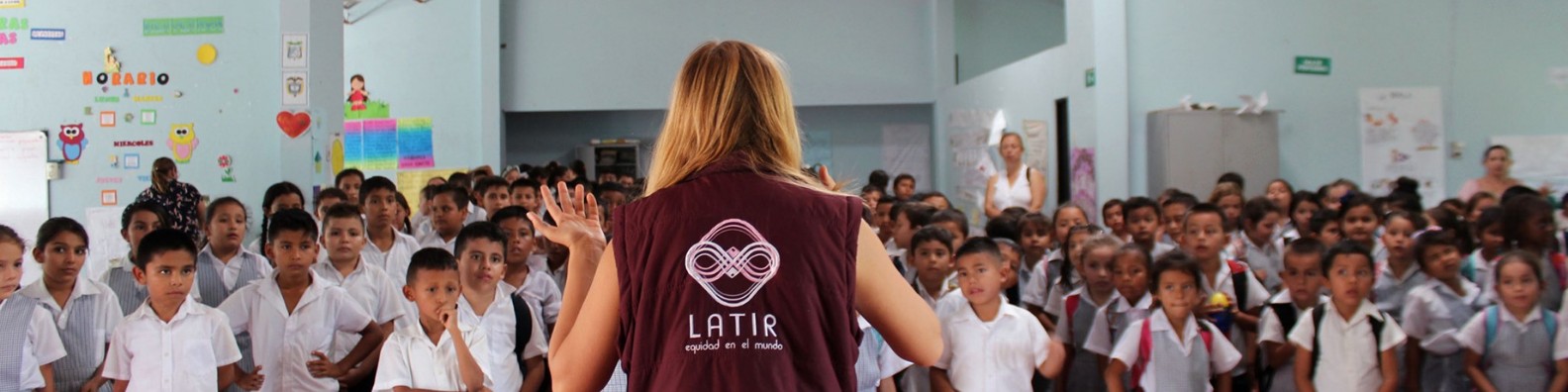
As it currently stands, the region has no national or regional action plan on YPS. Colombia is working on what might be the first National Action Plan (NAP) in the LAC region with Fundación LATIR and BogotArt as youth-based organizations co-chairing the National Coalition on YPS and co-leading the NAP process. Given previous regional experiences with Women, Peace and Security (WPS) National Action Plans in the region, the LAC YPS mainstreaming could benefit from a critical approach for its implementation, one that comes from below -the context, the territories, the saberes ancestrales- and from those actors working with peacebuilding.
Mexico: trying YPS from “below”
Understood holistically, many young people are already working with peacebuilding and YPS in Mexico. Involved in innovation, reintegration, arts and sports, youth empowerment, social cohesion, political participation, environmental care, many of them have identified their work with YPS because of the lack of awareness about the agenda, but also the access to spaces where such conversations are happening. This responds mostly to structural limitations relating to language, digital gaps, funding. The critical approach we are working on in this context aims to build a coalition with people who have not been involved with YPS but that can connect their existing work with the agenda, thereby making the agenda work for their own benefit.
Moreover, looking at the latest YPS UN Security Resolution that encourages Member States to have a national mechanism to implement the agenda; ongoing work in Mexico is undertaking an approach that may not necessarily result in the consolidation of a NAP. We are looking at evidence and existing legal frameworks where YPS could be mainstreamed such as the soon-to-be updated WPS NAP, or the potential Youth General Law that has been lobbied in the Mexican Senate for more than 10 years. While the region experiences dynamics that are not aligned with conventional dynamics to peace and conflict, youth in the LAC region are working determinedly in their territorios to overcome various features of direct and structural violence. My hope is that youth in the LAC region continue inspiring research that builds bridges in the current literature gaps. Youth efforts to transform conflict and to achieve lasting and positive peace in the LAC region should not be underestimated but rather positioned at the front of ongoing academic and practitioner conversations on YPS.
About the Author
Lani Jiménez is a researcher and activist on Youth, Peace and Security with more than 13 years of experience in the field of human rights. Alongside her on-going PhD, Lani founded and runs the ‘Observatorio de Juventudes Unidas por la Paz’ based in Mexico and is an official ‘Youth for Peace’ trainer with UNESCO. Be sure to follow her work here.