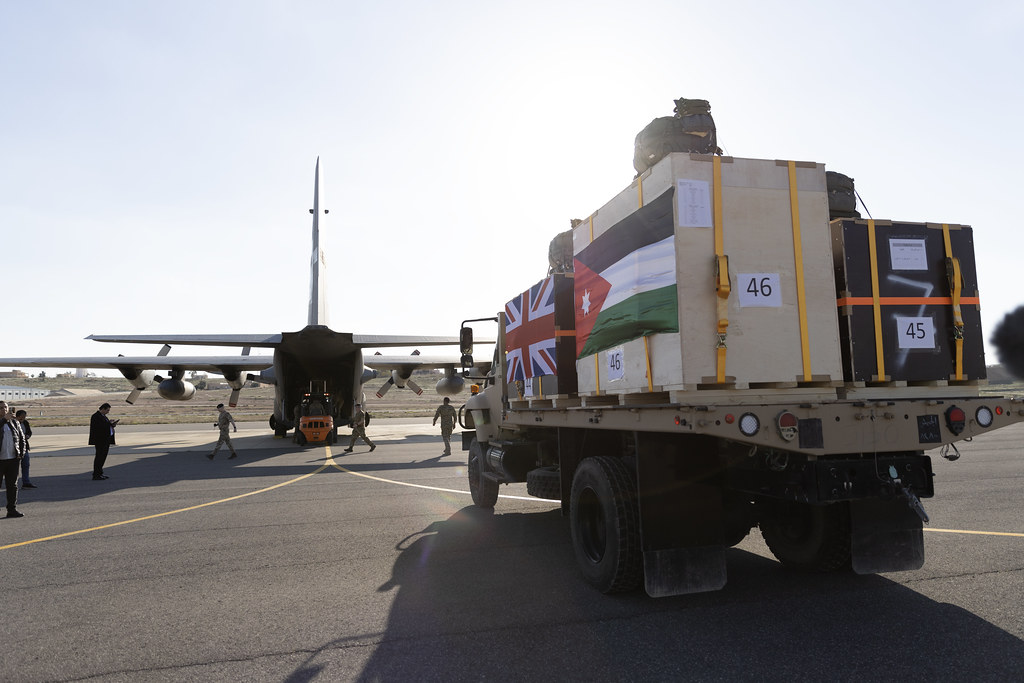
Britain’s relationship with the Middle East has been one of the most enduring yet strangely unsettled parts of its foreign policy since the end of the Second World War, and maybe even before that if one looks at the shadows of empire that lingered too long. From the slow dismantling of its imperial presence to its later participation in coalition wars and its changing diplomatic friendships, the United Kingdom has tried, sometimes awkwardly, to keep a hand in a region that still sits at the crossroads of energy, security, and global rivalry. Yet the country’s role has changed a lot, perhaps more than its policymakers like to admit. The Iraq War’s long shadow, domestic fatigue with intervention, shifting government priorities, and the uncertain recalibration after Brexit have all raised the same uneasy question again and again: how much influence does Britain really still hold in shaping what happens in the Middle East? Today, London still plays a part—diplomatic, economic, and security—but it does so mostly through coalitions and partnerships, through trade and quiet negotiation rather than the old habit of acting alone, which it can no longer afford.
From Imperial Legacy to Strategic Partner
Britain’s modern involvement in the Middle East can’t be separated from the weight of its imperial past, which still echoes in the political memory of both sides. After the Second World War, Britain remained deeply entangled across the region—Egypt, Iraq, Jordan, the Gulf—trying to manage what was already slipping away. The 1956 Suez Crisis was a breaking point, a humiliating reminder of limits, showing that British power could no longer move the world as it once did. Over the next decades, the country shifted from imperial overseer to something more like a diplomatic broker and security partner. By the late twentieth century, especially after the fall of the USSR in 1991, London’s approach revolved around maintaining strong ties with key states while aligning closely with U.S. strategic goals. The Gulf monarchies became particularly vital—not just for oil but for defence cooperation and arms trade. Britain holds bases in Oman and Bahrain, with Bahrain hosting the UK naval facility, while Britain still has major influence in Oman with longstanding defence ties. These show us that Britain still has influence and could project military power, but more as a junior partner to the USA, rather than an independent nation.
The Impact of Iraq and the Limits of Intervention
The 2003 invasion of Iraq was perhaps the most defining and damaging episode in Britain’s modern Middle East story. The United Kingdom stood as Washington’s closest partner, sending troops, taking charge of southern Iraq, and sharing in the burden of occupation. But the aftermath—chaos, insurgency, disillusion—reshaped British politics and public trust. The Chilcot Inquiry in 2016 confirmed what many already believed: the decision to go to war came before peaceful options were even attempted, and the planning for what came after was disastrously thin. We know that no plan came after the removal of Saddam, as the removal of Saddam led to one power, the Sunni minority, to lose and hand over the power to another nemesis, Iran. Today, Iran enjoys privileged access to Iraq’s political system and economy, while the United States has been reduced to a minor player. Through the removal of Saddam, Iran managed to create an empire controlling four Arab capitals throughout the Middle East including Damascus, until the recent fall of Assad in 2024.
This is why, after the Iraq war, a deep political caution has taken root in Westminster. In 2013, when Parliament rejected military action in Syria after Assad’s chemical attacks, it signaled something new: a limit to executive power and a public unwillingness to repeat Iraq. Since then, Britain’s role in the Middle East has depended on cooperation with a coalition such as the one with the USA to combat ISIS. This involved the British Army providing military support to local forces and the British Air Force conducting strikes in Syria and Iraq to defeat ISIS, which proved successful. It’s a quieter kind of involvement, one that tries to matter without being blamed, though sometimes it ends up being neither decisive nor invisible, just hesitant.
Post-Brexit Britain and the Search for Global Relevance
Leaving the European Union forced Britain to rethink its place in the world, and the Middle East became one of the testing grounds for this so-called “Global Britain” idea. The government pushed to strengthen trade and diplomatic ties beyond Europe, and the Gulf region quickly became central to that plan. Saudi Arabia and the UK launched the Strategic Partnership Council to develop collaboration in the fields of energy and defence. Qatar itself has pledged £10 billion in security, defence, and trade investments after Brexit, and a football club like Newcastle was bought by the public investment in Saudi Arabia.
Another major area where Britain still has influence is arms and military deals, especially with Gulf nations. The UK is one of Saudi Arabia’s leading arms suppliers alongside the USA and has constantly supported Saudi Arabia in its intervention in Yemen, with Uk arms exports totalling 9.5 billion between 2015 and 2022, and between 2022 and 2025, it included another arms deal worth 2.9 billion, which included Typhoon and Tornado aircraft. With Qatar, Britain has constantly provided arms between 2020 and 2024, totalling 4.1 billion, which included 24 Eurofighter Typhoons, and has joint military operations with the Qatari government in counter terrorism.
However, critics point out the contradictions: economic gain versus ethical cost. Arms sales linked to the Yemen war, human rights concerns brushed aside for contracts—all of it complicates Britain’s claim to moral leadership. Data from the civilian Impact monitoring project shows that 25% of the 1727 attacks by the Gulf coalition in Yemen came from British-made weapons, which led to the deaths of 839 civilians and another 1400 injured. Many at the time considered this to be a war crime. Others defend these partnerships by arguing that if Britain withdrew from the arms market, other suppliers such as Russia or China would quickly fill the gap, reducing British influence while doing little to improve human rights conditions. This debate highlights the broader dilemma at the heart of Britain’s Middle East strategy: balancing economic and security interests with the ethical commitments that underpin its foreign policy identity.
Constraints in Regional Conflicts
Despite its diplomatic efforts, Britain’s ability to shape outcomes in Middle Eastern conflicts is modest at best. The war in Gaza, the drawn-out tragedy in Yemen, and the unending crisis in Syria all show how limited outside powers have become. Britain participates in humanitarian aid, UN negotiations, and multilateral talks, but substantive decisions are made by regional actors or larger powers such as the U.S. and Russia. In Syria, Moscow’s intervention for Assad changed everything, leaving Western influence almost decorative. While Russia and Iran eventually lost in Syria due to the fall of Assad, this wasn’t down to Britain; it was more down to Israeli strikes against Hezbollah and Iranian IRGC forces throughout 2023-2024, which weakened them and therefore allowed the HTS to advance through Syria unopposed. That’s not to say Britain doesn’t influence Syria now, as after the fall of Assad, Britain re-established diplomatic relations and removed HTS from the terrorist list, but its influence is overshadowed by other powers like Saudi Arabia, the USA, and even Russia, which still has its base in Syria.
In Yemen, Britain supports UN diplomacy but faces criticism for its arms trade with Saudi Arabia, which fuels the same conflict it claims to want to end. The Gaza war exposes another truth: Britain’s leverage over Israel is minimal compared to Washington’s. What’s most striking and shows British influence is minimal is the current war between the USA and Iran, where the USA did not share operational details with the UK due to the UK refusing to allow the USA to use British bases to strike Iran. Donald Trump criticized this decision and called the special relationship between the USA and the UK, not what it used to be. As a result, British diplomacy now leans toward humanitarian gestures, ceasefire advocacy, and coordination with allies rather than direct political steering. It’s a kind of influence that looks like activity but often feels like waiting for others to decide.
Conclusion
Britain’s influence in the Middle East has transformed almost beyond recognition since the imperial era. It no longer commands or occupies, yet it still negotiates, sells, trains, and advises. The Iraq War’s legacy and domestic skepticism have made large-scale interventions politically impossible, pushing Britain toward coalitions and diplomacy instead. Meanwhile, the region itself has changed—Russia, China, Turkey, and Iran now share the stage with Western powers, making influence a collective rather than a commanding affair. In this new order, Britain’s role is best seen as connective rather than dominant, part of a web of alliances and institutions that together shape outcomes. Whether it can maintain even that role depends on how well it balances its economic ambitions with its moral posture and its strategic restraint with its desire for recognition. The question is not whether Britain still matters, but how it chooses to matter—and whether that choice will be enough in a Middle East that listens less and decides more for itself.