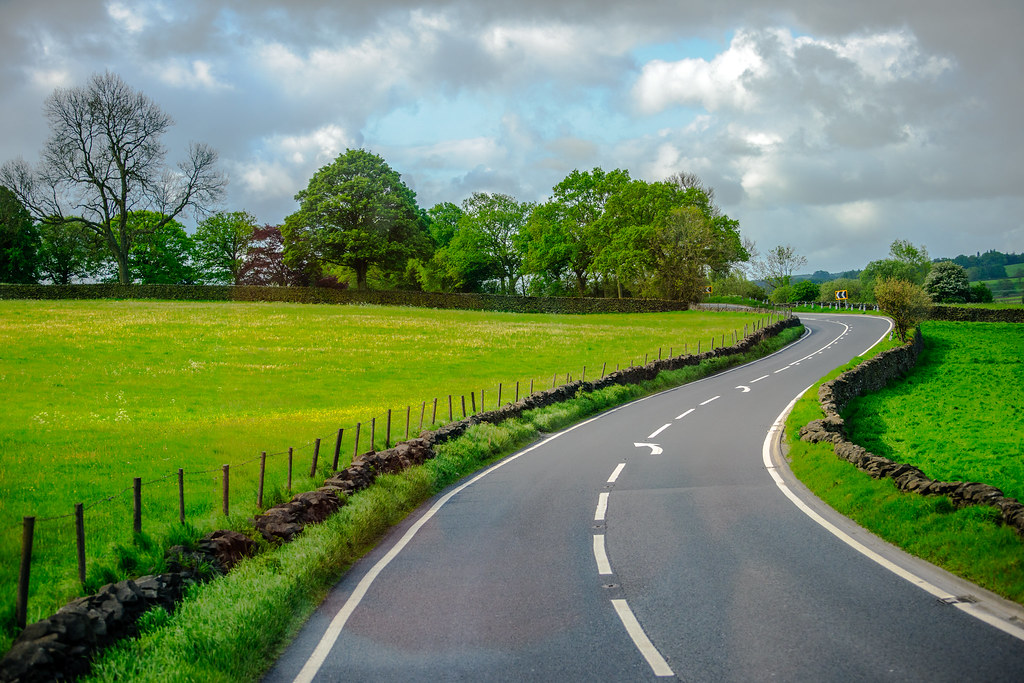
As he began his speech, Prime Minister Starmer set out the dangers of a more threatening Russia with a stronger industrial base and the ability to employ malicious tactics below the threshold of war. Then there was a pause. Starmer had a small, wry smile as he said: “To break the convention of a thousand speeches, we are not at a crossroads today. The road ahead is straight and it is clear”. It was a tongue-in-cheek comment and it was also refreshing to see that Europe seems relatively aligned on having a more European NATO, on bolstering defence capabilities with the intent of standing up to Russia, and an awareness of the US’ changing position. Much of politics is about taking decisions – cutting away the comfort of possibilities for the practical benefit of an intentional outcome. The UK, it seems, has decided to “build our hard power” since “it is the currency of the age”. There is, however, some contention about how ‘clear’ this road ahead actually is. Which departments will lose funding to pay for this, which demographics will bear the tax burden, what specific assets will the UK prioritise?
As we start the new year for the British Institute of Global Affairs, we want to build on the successes of last year – the diversity of our commentary pieces, our thematic explorations in our podcast and YPS series – while also focusing on the big challenges for British foreign and security policy. I want to start with some national reflection.
Britain Abroad
One of the more viral moments from Starmer’s speech was his declaration that this was no longer the Britain of the Brexit era, a line that garnered an overall positive reaction from the international audience. While the Brits are known socially for our drinking, quirky phrases, and hooligan antics; politically we often have more credibility than we are aware of at home. This was something that first stood out to me when I studied abroad in France. One of my lecturers had been an EU adviser in the delegation sent to the first Trump administration. I asked him about the role of the UK in a post-Brexit EU and he described how the UK was one of only three main European security actors – alongside France and Ukraine. Admittedly, Turkiye and Norway are of relevance while Sweden, Poland, and Finland maintain formidable defences for an invading army to contend with but the idea that France and Germany could lead Europe’s security alone was dismissed out of hand. Also during this time, I became close friends with a Ukrainian student who was working for the Kyiv Independent at the time. She was shocked that Brits felt like they could not stand up to Russia or that they had no ability to influence decisions.
These experiences are not simply the product of confirmation bias and the friendly university atmosphere. Just recently, I finished Jens Stoltenberg’s memoir On My Watch based on his experience of leading NATO as Secretary-General during Russia’s invasion. On the Brits, he noted that the UK “supported the vast majority of [his] initiatives, whether these related to new battlegroups in the eastern part of the alliance, or the war on terror. The UK was a country I could always count on, even during times of changing governments with various prime ministers”.
Nor is it just at NATO that the UK garners respect and appreciation. During my internship with the Organization for Security and Cooperation in Europe (OSCE) – the largest regional security organisation in the world – my colleagues and I watched a livestream of our Mission’s Ambassador reporting to member states in Vienna. At the end of his presentation, member states reply with their concerns, criticisms, and complements. I was sitting next to someone on the senior leadership team who was showing me group messages from other office leaders reacting to the different speeches. When the UK representative delivered their feedback, the group chat cheered us on and was thanking us for our contribution.
At leading universities, NATO, the OSCE, and elsewhere, the UK has garnered respect and credibility. When I reached out to an old American mentor of mine, he said that in his younger days, he believed that there was nothing greater than being British. He had been excited to live here for a while and when our conversation turned to the current security issues, he excitedly started quoting from a book he had on hand describing the UK’s saving role in world affairs. The extract had been so excited to share was from The Gathering Storm, by Winston Churchill. Whether soft or hard, whatever the currency of the age, the United Kingdom does not find itself with empty pockets.
Looking in the Mirror
Returning to the Home Front, we Brits have a rather disparaging view of ourselves. I count myself fortunate to have friends from a variety of backgrounds, yet most of them have a lacklustre view towards the UK. When I was studying my Master’s at St Andrews, people close to me seemed shocked at the notion that the UK would have any chance of standing up to Russia in a head-on fight. To be sure, Russia has some distinct advantages (not least its large population and war-ready industrial base) but as Field Marshal Lord Richards points out, Russia cannot even beat Ukraine which is in part down to the training and equipment provided by the UK. Closer to home, I was talking politics with a friend who works as a construction worker. In the case of a conflict, he explained, he’d probably injure himself to avoid being drafted into a war started by corrupt politicians.
Countries are worth critiquing and problems need to be aired, but it is a worrying development when the concepts and institutions that govern daily life – the nation-state – find neither political buy-in nor credibility from the new generation of professionals. NATO published research on societal resilience that, amongst its assertions, argued that society needs to have some self-confidence. If there were an attack from an opponent and the UK’s population believed it was unable to rise to the challenge, it would likely capitulate instead of rallying a defence. Even if the UK had the resources, equipment, technology, military expertise, and structures to build up a response and bounce back effectively, the UK still would have lost. Why fight on when you believe you’re guaranteed to lose? When those critical moments arrive, when there is a risk of failure but a possibility of victory, when the cards have been dealt but there is all to play for – that is where a country’s self-belief makes a difference.
Poland’s Ambassador to the UK recently finished their time with us. As Ambassador Wilczek left, he wrote a piece in the Spectator. He said that wherever he went in Britain, there was a sense from its people that “this country is finished”. Yet from his experience, he shared that “British greatness has never been only about GDP. It is rooted in institutions, continuity, understatement and resilience — from the monarchy and common law to the BBC, world-leading science, culture, tech and the quiet competence of millions who simply get on with things.”. He ends his point by saying “From Warsaw, I can say without irony: Britain remains one of the most civilised, innovative and determined nations in the world. It does not need to be “great again”. It simply needs to recognise that it already is.”.
We have passed the crossroads and our country’s leadership is making decisions about our defence.We cannot, as Starmer hopes, return to “strategic stability”. There is no “normal” to return to now.The road ahead is shrouded with uncertainty, mystery, and dangers. What remains for us to decide is how we choose to react to what lies ahead.
Though much is taken, much abides; and though
We are not now that strength which in old days
Moved earth and heaven; that which we are; we are,
One equal temper of heroic hearts,
Made weak by time and fate, but strong in will
To strive, to seek, to find and not to yield.
“Ulysses”, Alfred Lord Tennyson