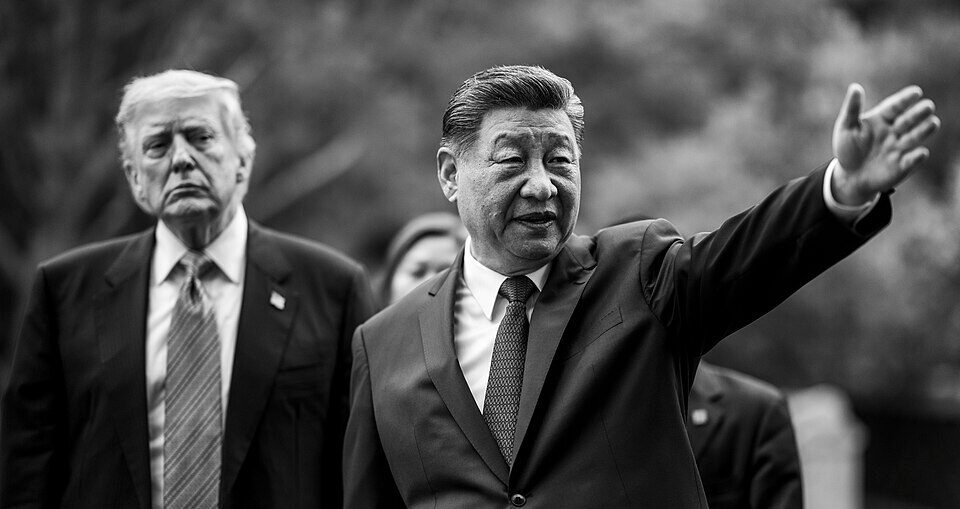
‘Transactionalism’ has reentered the zeitgeist due to the perceived collapse of the post Cold War world where the Liberal International Order (LIO) and multilateralism triumphed against the warmongering and cynicism of the 20th century. However, this norm is quickly reverting into a world where self-interest and short term gain are prerequisites for engagement. Long term strategic goals and principles of peace and alliances based around ideological and political norms be damned. This concept is most associated with United States President Trump and his approach to foreign policy where the closest allies are reduced to tools by which to serve American short-term gains, (or personal vanities), of which more favourable terms are secured through sycophantic gestures or uncritical alignment with the US policy of the day. One could even argue the leader at the helm is more drawn towards allies that present lucrative business opportunities like the Gulf states, rather than states with shared values like Canada or South Korea.
This policy is often perceived as a new framework of foreign policy, a new paradigm altogether. However, the characteristics are not. Short-termist self-interest; unconstrained great power politics; disregard for the impacts on allies; and the pursuit of goals motivated by dominance and/or ideological goals. All of these describe the world when constraints are not placed upon states and render smaller states powerless. This has been true for most of modern history, especially since the Cold War and the damage the late 20th century wrought upon most countries. Trump, (and other guilty parties such as Xi), are just new flavours of the same ‘old world’ foreign policy.
American Transactionalism
Does this new flavour of American exceptionalism require a new approach from allies to counterbalance or protect themselves from Trumpian attitudes? Warning signs of the reverberations caused by the US have always been known to those in America’s orbit. Canada has faced repeated pressures since the end of the Second World War over how it manages its own budget; spends on defence and social security; independently builds alliances and even responds to threats against its own sovereignty. Canadian Prime Minister Mark Carney’s battle is also not new, as predecessors like Louis St. Laurent, Lester Pearson, and Pierre Trudeau had to contend with similar battles. However, Carney does not have the comfort of a black and white Cold War paradigm where the US political heads saw more benefit in Canada as an independent and smaller ally, but rather a subsidiary to be consumed if one believes Trumpian circles. Carney’s January 20th, 2026 speech at the World Economic Forum references ‘ruptures and fortresses’ in the world order and the need for “intermediate powers” to cooperate further. This is already being done in Canada’s cooperation with the EU, ASEAN and the CPTPP, seeking to diversify away from the overwhelming reliance on US import and export as the world’s largest consumer market. This will still mean it will always reap the costs and benefits of close proximity to the US despite understandable attempts to protect itself from them.
Chinese Transactionalism
Is Chinese ‘transactionalism’ under Xi new in policies or goals? China is the undisputed ‘anti-western’ superpower that is the biggest rival of the United States and the Western world. However, very little unites China with its most important allies like Iran, Russia, or North Korea beyond hating the West. China knows this and either builds relationships on that basis to its own ends or exploits that sentiment amongst smaller powers to gain more favourable terms, such as large parts of Africa, bitter over imperial exploitation by European powers like Britain, Belgium, France, and Germany. ‘Anti-westernism’ has been a consistent policy for Chinese Communist leaders since its inception. This is the fusion of an ideological goal with pragmatism and opportunism. The economic relationship between China and African countries began as an ideological solidarity policy under Mao, that of international revolution. This later developed in the 1980s to a pragmatic policy of increased market cooperation and mutual benefit. More recently, the policy has been centred around aiding the industrialisation process within African countries, without focusing on democratic development. This policy has since branched out beyond Africa and China’s regional neighbours to most parts of the developing world and even smaller parts of the developed world, most notably with the Belt and Road Initiative (BRI) infrastructure program.
This pretence of a superpower China benevolently seeking out those downtrodden and/or exploited countries out of virtue or solidarity is a farce. Sri Lanka, Angola, Greece, and many others were just identified as business opportunities for China and its state-economy apparatus to ensnare to its own advantage. This is especially so when one sees the impact of being indebted to China. Large parts of Africa including Sudan, Angola, Tanzania, and throughout now rely on Chinese exports of manufactured goods in exchange for Africa’s vast natural resources such as Sudanese oil. Sri Lanka had its deep political and financial crises amplified by Chinese loans, ownership of the Hambantota port, and its own regional power play against India, all of which played a part in collapsing multiple Sri Lankan governments. Another more worrying example closer to the West is when Greece vetoed the 2017 European Union report into Chinese human rights abuses after pressure from China over its BRI investments. However, the approach of more open relations in trade and cooperation with the West to bolster its reputation and grow its economy is a policy pursued since 1978 under Deng Xiaoping. To an extent, it has so far successfully served China in empowering itself whilst undermining the West’s cohesion. Simultaneously, China’s regional and global behaviour has brought itself into conflict with most of its neighbours and emboldened those more allied to the West like Japan and South Korea to build closer ties and amplify production and defence spending to secure themselves against China’s regional bullying.
Conclusion
Who is best served by ‘transactionalism’? The most striking outcome of the transactional world is how self destructive it is. The illiberal, transactional and great power world inevitably self-destructed due to its own contradictions. When doctrines which prioritise security over values or short term leverage over cooperation become the norm, legitimacy in either the elected government or dictatorship weakens. Can China continue to grow and avoid domestic time bombs if it repeatedly falls into dispute with the rest of the region and overextends its influence in the ‘anti-western alliance’? Many Western governments are clinging onto the hope that these shocks will disappear after Trump leaves office. However, if future US administrations, (or the American public ultimately responsible for electing them), feel that high tariffs, protectionism, isolationism and belligerence towards allies benefited them, they might be less incentivised to cooperate again or build more values-based alliances. There is a level of unjust hysteria over the current danger of foreign policy as if it is unprecedented. Diplomats, experts, politicians and civil society could stand to learn from past, and more dangerous, examples of how their leaders tackled attempts at clinging onto the transactional world. The current zeitgeist is merely a metamorphosis of the same instincts that created such calamity before the Liberal International Order.