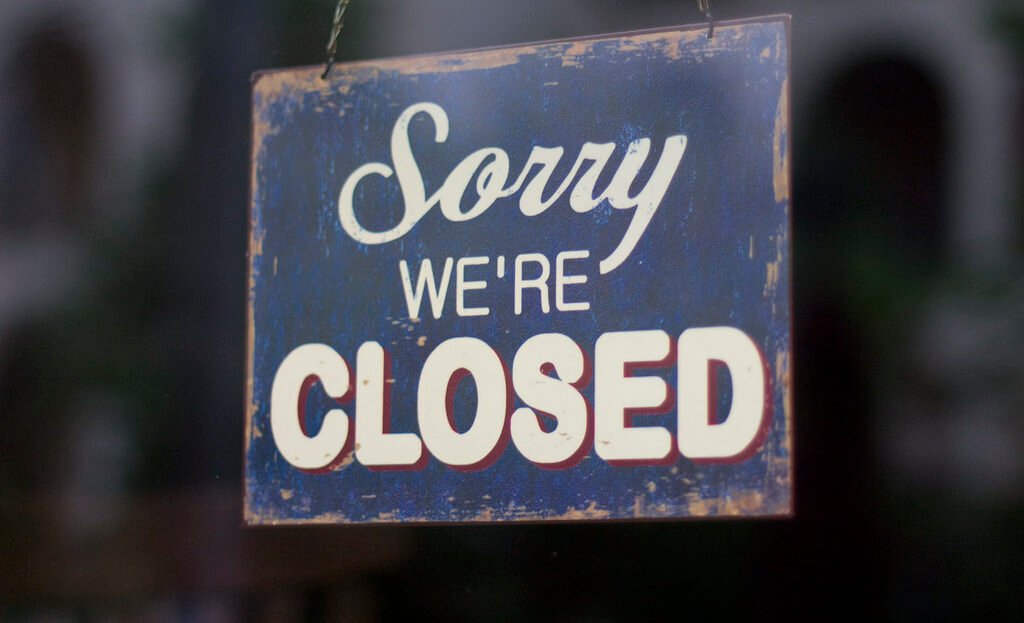
One in six hospitality venues are now at risk of closure within the next twelve months, according to recent survey data from hospitality research firm CGA, part of NielsenIQ. Almost a quarter of operators are already running at a loss. A new campaign, fronted by chef Tom Kerridge, is calling for a VAT cut to help reverse the decline.
Three key pressures are driving the closures: a cost-of-living crisis squeezing what customers can afford to spend, a rise in employers’ National Insurance contributions, and the rapidly rising cost of goods and energy. Food prices alone are forecast to be 50% higher this November than in 2021, according to the Energy and Climate Intelligence Unit.
Kerridge’s campaign, ‘VAT’s the Problem’, launched in June 2026, is calling on the government to reduce VAT for hospitality businesses from the standard 20% to 10%. This approach draws on a wider European trend of cutting hospitality VAT rates to tackle similar pressures. Germany reduced VAT on hospitality food from 19% to 7% in January 2026. Ireland followed with a cut from 13.5% to 9% in July 2026.
Reducing the rate of VAT could be an effective option as it is under direct government control and has an immediate impact on margins. It is also far more straightforward to administer this support than a programme of wage subsidies or grants. Previous governments have recognised this potential, as seen when the government reduced the VAT level to 5% during the pandemic.
The stakes are high, as the scale of the industry makes clear. Hospitality remains one of the country’s most significant economic and social contributors, generating £140 billion in annual economic activity and directly employing 3.5 million people, according to UK Hospitality. Beyond the direct economic benefits, hospitality venues have huge social value as they act as a third space—somewhere to exist outside home, school, or work. Their closure is felt acutely in the communities that lose them. Crucially, these effects are felt nationwide; not just in the places most visible to Westminster.
That value goes beyond the venues themselves to those whom the sector employs. Hospitality employs more 16–24 year olds than any other sector, offering a route into work that doesn’t require formal qualifications, with skills learnt on the job instead. That matters because the rising number of NEETs (young people not in education, employment or training) has become one of the most pressing economic and political issues facing the country, serious enough to prompt the ongoing government review by Alan Milburn.
Directly feeding into the rise of so-called NEETs is the decline of the Saturday job, as the rising cost of employing people discourages employers from offering 14–17 year olds their first job. Fewer of these early opportunities means fewer young people gaining the experience needed to move into full-time work later.
The decline of these opportunities is socially regressive. Entry-level and Saturday jobs have long served as a leveller, giving young people from all backgrounds a first foothold in the workplace regardless of academic qualifications or family connections. Without these opportunities, that first step becomes harder to find, disproportionately so for those without other routes in. Allowing this decline to continue risks creating costs further down the line. The skills learnt in these jobs fall outside of traditional qualifications, but they’re just as valuable. Two years working full-time in front of house at a hotel taught me to think quickly on my feet, how to read a room, and keeping composure under pressure—skills I still use now, even in a completely different industry.
Not everyone agrees a VAT cut is the right solution. Critics, including analysts at Tax Policy Associates, question how evenly it would be felt across the sector. The smallest businesses, which make up 45% of the sector, don’t pay VAT at all, meaning that half of the industry wouldn’t benefit from a cut.
A better-targeted combination of policies would close that gap. Reforming business rates and reversing the recent employer National Insurance rise would benefit all hospitality businesses, regardless of VAT status. This matters in particular because hospitality is one of the most labour-intensive sectors in the economy, employing large numbers of people relative to its turnover. This makes it disproportionately exposed to both the rise in NI and successive increases in the minimum wage compared to many other sectors. A sustainable policy response needs to focus on labour costs, or it will only ever tackle part of the problem.
Even before any decision on the 10% rate, the ‘VAT’s the Problem’ campaign has already had an effect on government policy. In July 2026, Prime Minister Andy Burnham announced a 20% cut to business rates for pubs, clubs and live music venues, suggesting the pressure on the government is being felt. However, the response falls short of what is needed: restaurants and hotels are excluded entirely, and for the businesses covered, a 20% cut only partially offsets the pressure they’re under.
A better solution would extend business rate reductions across the whole sector, paired with NI relief that reflects how disproportionately labour costs have hit hospitality. The government has taken a positive first step, but left where it is, the immediate effect will be more closures and fewer entry-level jobs for young people who need them. Whether the government builds on this in the Autumn Budget remains to be seen. Rates cuts can be undone by a future budget; however, a generation losing out on opportunities to enter the workforce doesn’t get that chance back.
Well said Maya